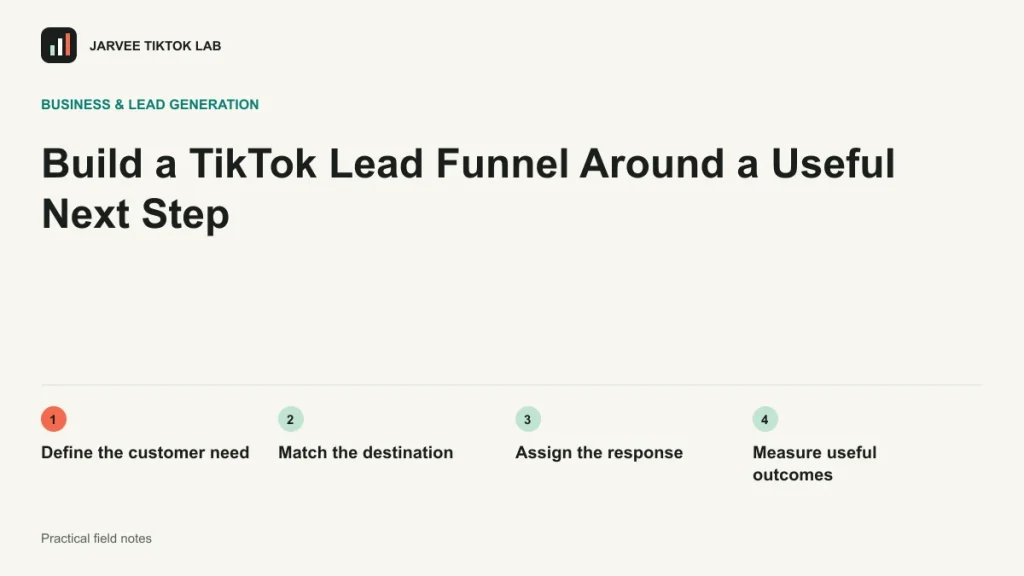
A view becomes useful to a business when the interested person can take an appropriate next step and receive a relevant response. Map that journey before optimizing isolated engagement numbers. A large audience is not the same as a qualified sales opportunity.
A practical workflow
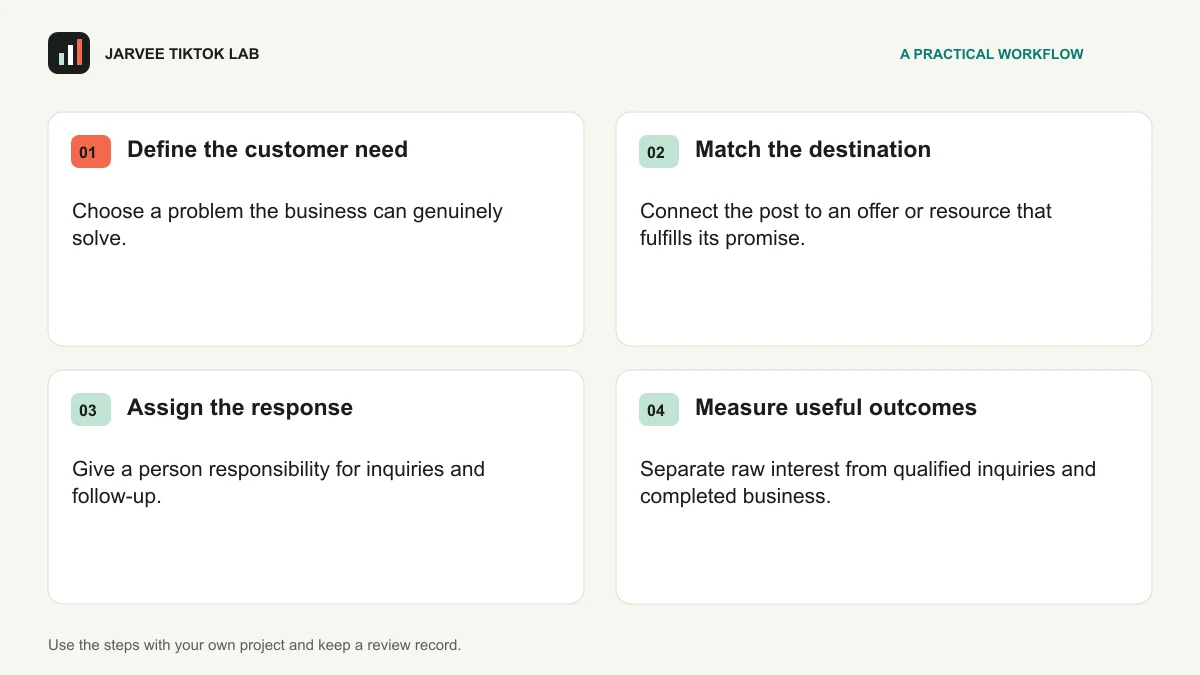
- Define the customer need. Choose a problem the business can genuinely solve.
- Match the destination. Connect the post to an offer or resource that fulfills its promise.
- Assign the response. Give a person responsibility for inquiries and follow-up.
- Measure useful outcomes. Separate raw interest from qualified inquiries and completed business.
Try it on one project
Map a fictional consultation offer from video to landing page, inquiry and response. Identify where the visitor might become confused. Test the form and the response process before directing more people to it.
For a structured practice exercise, continue with the course lesson on a useful customer journey.
Keep a useful review record
Follow the whole journey from the post to the business response. A useful review distinguishes attention, a relevant inquiry, an agreed next step and completed work. Keep the reporting period and definitions consistent. If interest is rising but the team cannot respond or deliver the offer, publishing more may amplify the wrong problem. Investigate the destination, response and fulfillment process alongside the creative work.
| Record | What to keep |
|---|---|
| Question | The specific uncertainty this piece of work should help resolve. |
| Version and context | The approved material, intended audience and observation period. |
| Observed result | What happened, with relevant definitions and any unexpected issue. |
| Next decision | One change to test, its owner and a date to review it. |
Keep the offer, price information, availability and destination current. Assign someone to handle factual corrections and customer questions. Clearly label hypothetical examples and keep a planning target separate from a verified result. When a commercial relationship is involved, check the applicable disclosure requirements before releasing the content.
Two questions before the next iteration
Which outcome should a business review first?
Start with the outcome the campaign was designed to support. A raw view or message count does not establish customer fit, completed delivery or profit. Define the useful action before collecting more numbers.
What belongs in a small campaign brief?
Write the audience, problem, offer, evidence, next step and responsible person. Add a practical review date and the information needed to decide whether to continue, change or stop the test.
For the messaging part of this process, compare your requirements and review points with SMTasker’s TikTok Contact workflow. Start with one concrete task and review the actual output before expanding the workflow.
For the next part of the work, read the audience-source review and keep the practical output beside your review notes.
Official reference
TikTok: commercial content disclosure. Check the current requirements and feature availability for your actual account and market when applying this guide.