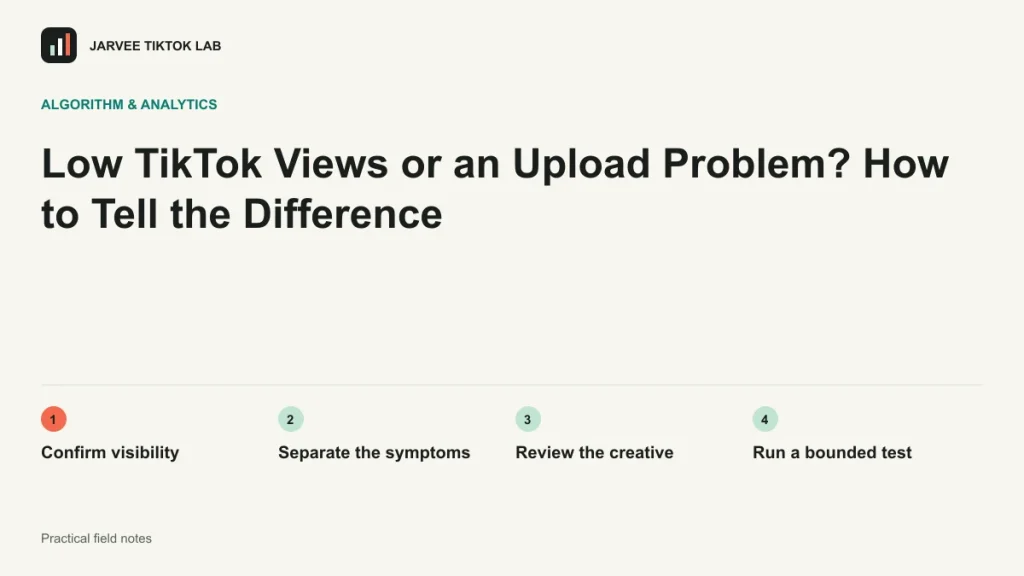
A post with a few hundred views and a post that never becomes accessible present different questions. Neither number proves a universal algorithmic jail. Diagnose availability first, then evaluate what the content offered the people who saw it.
A practical workflow
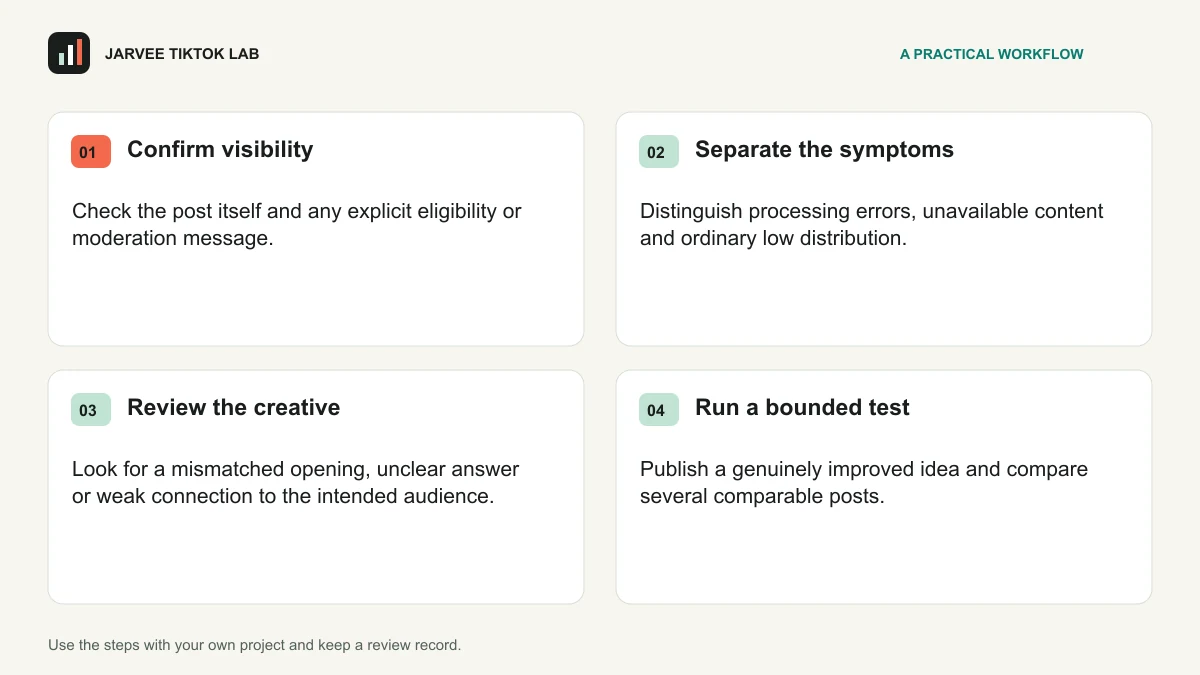
- Confirm visibility. Check the post itself and any explicit eligibility or moderation message.
- Separate the symptoms. Distinguish processing errors, unavailable content and ordinary low distribution.
- Review the creative. Look for a mismatched opening, unclear answer or weak connection to the intended audience.
- Run a bounded test. Publish a genuinely improved idea and compare several comparable posts.
Try it on one project
Build two columns in a review sheet: technical observations and content observations. Put each piece of evidence in the appropriate column before deciding whether to contact support or revise the next video.
For a structured practice exercise, continue with the course lesson on testing and audience response.
Keep a useful review record
Choose an observation period before comparing posts. Record the audience question, format and length beside the available metrics. Compare similar work and keep unusually strong or weak results visible without treating an outlier as a permanent rule. If several things changed together, the result may not tell you which change mattered. The next test should reduce that uncertainty rather than repeat every feature of a successful post.
| Record | What to keep |
|---|---|
| Question | The specific uncertainty this piece of work should help resolve. |
| Version and context | The approved material, intended audience and observation period. |
| Observed result | What happened, with relevant definitions and any unexpected issue. |
| Next decision | One change to test, its owner and a date to review it. |
Separate a technical failure, an explicit platform notice and an ordinary performance observation. They call for different next steps. If a notice exists, use its actual wording. If the issue is creative, examine the opening, evidence and connection to the intended audience before proposing an account-wide explanation.
Two questions before the next iteration
Can one post prove an algorithmic rule?
One observation can suggest a question, but it does not reveal a complete ranking system. Look for a consistent pattern across comparable work and distinguish an official requirement from your own hypothesis.
What should I compare before changing the plan?
Keep the purpose, format, length and review period beside the result. When those conditions differ, describe the difference instead of assuming that the largest number proves a particular tactic.
If research is the repeatable task you want to organize, compare the source-selection and review steps in your plan with SMTasker’s TikTok research workflow. Start with one concrete task and review the actual output before expanding the workflow.
For the next part of the work, read TikTok Video Stuck at Zero Views: A Diagnostic Checklist and keep the practical output beside your review notes.
Official reference
TikTok: how recommendations work. Check the current requirements and feature availability for your actual account and market when applying this guide.