A different file hash describes a different file, not a new creative contribution or permission to reuse the material. Public information does not reveal every detail of TikTok's duplicate-content detection. Focus on original work and appropriate rights rather than metadata tricks.
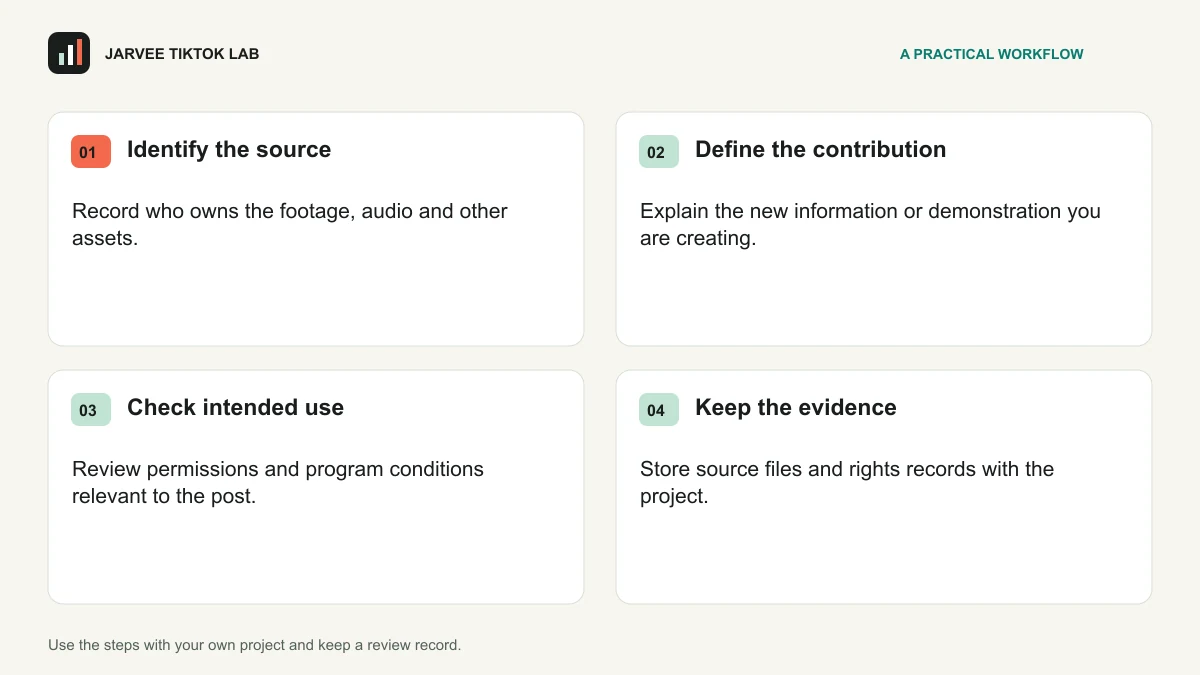
A practical workflow
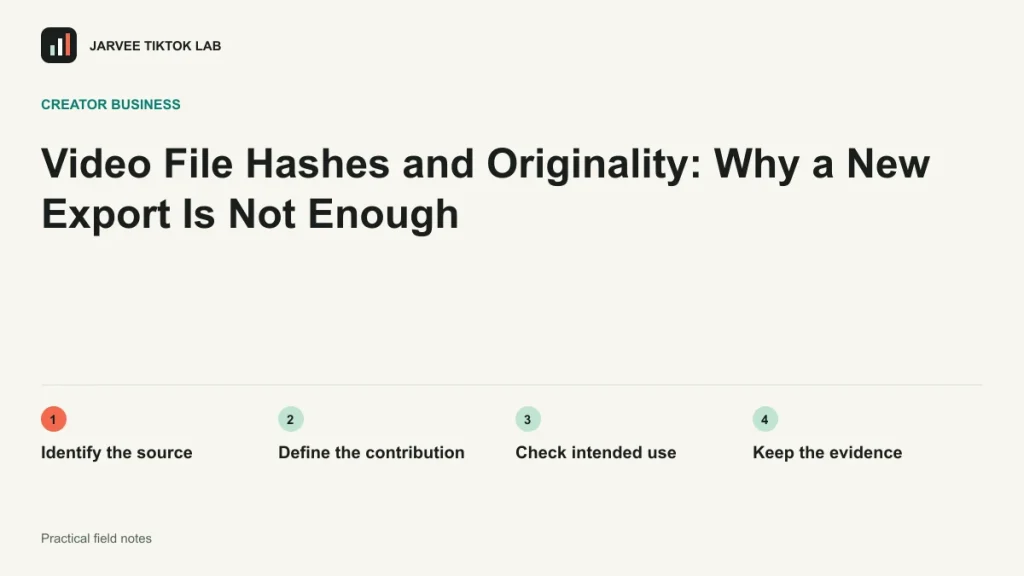
- Identify the source. Record who owns the footage, audio and other assets.
- Define the contribution. Explain the new information or demonstration you are creating.
- Check intended use. Review permissions and program conditions relevant to the post.
- Keep the evidence. Store source files and rights records with the project.
Try it on one project
Compare a simple re-export with an original explanation using footage you control. Describe the difference in the viewer's actual experience rather than treating a changed checksum as evidence of originality.
For a structured practice exercise, continue with the course lesson on monetization choices.
Keep a useful review record
Keep production results, program eligibility and business economics in separate parts of the review. A completed video does not automatically qualify for a program, and attributed revenue does not include every operating cost. Use the account dashboard and current terms for actual program decisions. When modeling a possible business, label assumptions and replace them with observed records as the project develops.
| Record | What to keep |
|---|---|
| Question | The specific uncertainty this piece of work should help resolve. |
| Version and context | The approved material, intended audience and observation period. |
| Observed result | What happened, with relevant definitions and any unexpected issue. |
| Next decision | One change to test, its owner and a date to review it. |
Store original media, permissions and relevant project records in an organized archive. Give every reused element a clear source and intended use. A new export or visual effect does not by itself create rights or an original contribution. Review the final work for factual accuracy as well as presentation.
Two questions before the next iteration
Does a format or income target guarantee a result?
No. A format is an operating choice and a target is a planning assumption. Eligibility, audience response, delivery effort and actual costs still need their own review.
What should an original production record include?
Keep the source files, permissions, contribution, approval and final export together. Record any relevant program conditions separately so a successful upload is not mistaken for proof of monetization eligibility.
For the next part of the work, read Creator Rewards Eligibility and Automation: Review the Actual Rules and keep the practical output beside your review notes.
Official reference
TikTok: Creator Rewards program guidance. Check the current requirements and feature availability for your actual account and market when applying this guide.